AI-Built Websites: Are They Really All They're Cracked Up to Be?
AI can generate a website in minutes. But who owns, updates and maintains it after launch? A practical look at website builders, Webflow and long-term control.
AI Can Build Your Website. But Who Looks After It?
"Just build your website with AI." It sounds brilliant, doesn't it? And in many ways, it is!
Someone with zero web design experience can now use ChatGPT or Claude to create something visually impressive in a matter of hours.
But there's a big difference between creating a website, building one that generates enquiries, and ensuring a business can comfortably manage it for years to come.
I'm a Webflow designer and developer, so naturally I have an interest in this. But I also love AI and use it every day.
My concern isn't how websites are built. It's who makes the decisions, and what happens after launch.
When the IT person becomes the web designer
Imagine a business asks somebody in its IT department to build a website using AI.
They might generate the code themselves or use an AI website builder with hosting and content management already included.
Either way, being technically competent doesn't necessarily make somebody a graphic designer, brand specialist or website strategist.
Good design requires an understanding of typography, visual hierarchy, brand guidelines and individuality. Many AI-generated websites look polished, but can also feel remarkably similar.
More importantly, an attractive website isn't necessarily an effective one.
Someone still needs to plan the wireframes, decide what information appears where, and create a clear journey that builds trust and generates enquiries. That's the foundation of conversion-focused website design.
There's also SEO and AI search optimisation: keyword research, headings, internal linking and Schema markup to help search engines understand the business.
And then there's visual drift. As more prompts are added, layouts, buttons and spacing can gradually become inconsistent, undermining the brand's identity.
Somebody still needs to establish the standards, make informed design decisions and create a structure that maintains consistency across the website.
What happens when the website needs changing?
With a custom-coded website, changes might involve editing files, revisiting AI prompts and uploading updates to a hosting provider.
Even with a managed AI website builder, businesses need to consider who can edit content, what permissions they have, and how the design is protected.
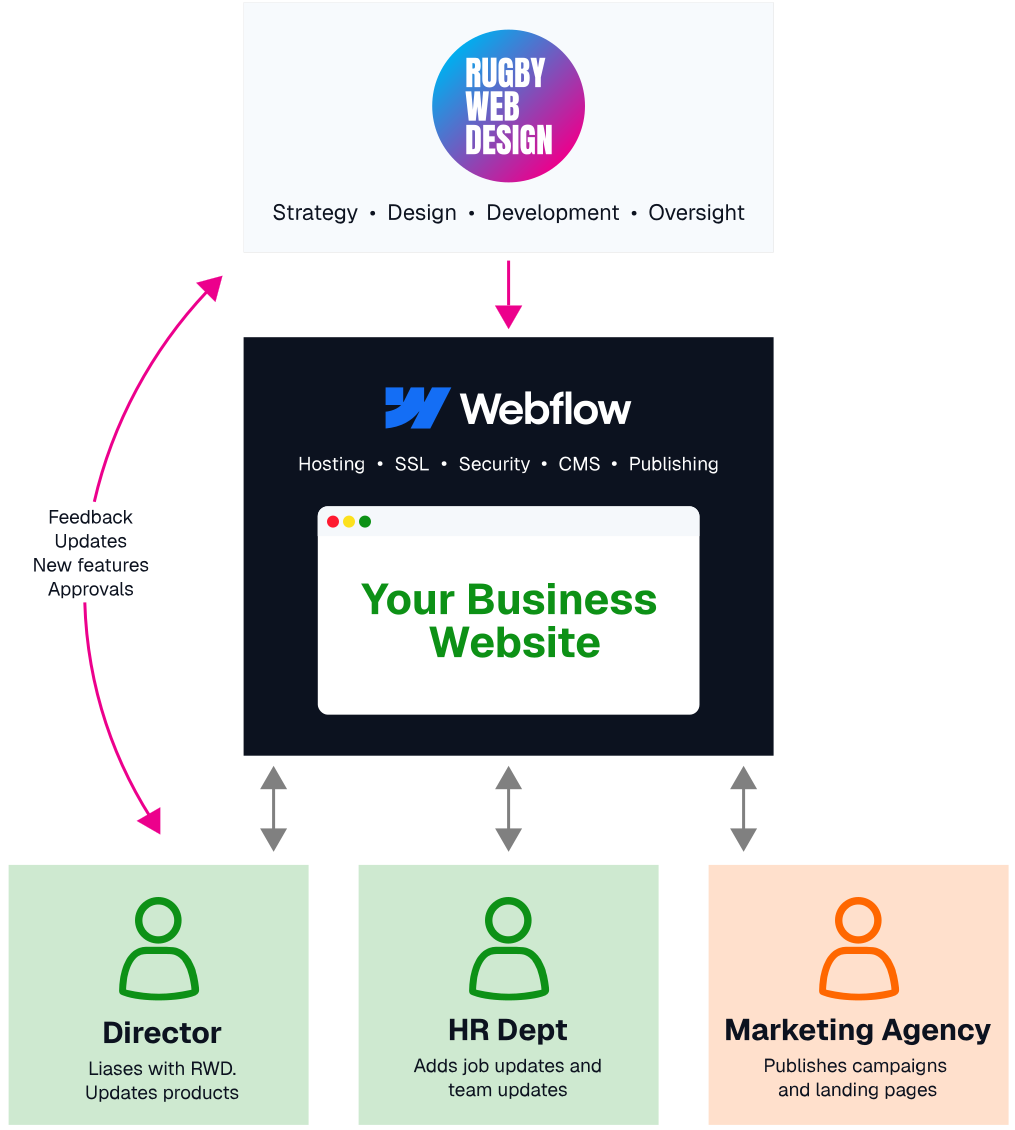
What happens when the Sales Director wants to update products, HR needs to advertise a vacancy or the marketing agency wants to publish an article?
Can they make those changes themselves, or does everything depend on the person who built the website? And what happens when that person leaves the business? Their knowledge of the site leaves with them.
Why I choose Webflow
This is one of many reasons I specialise in Webflow. It brings design, CMS, hosting, security and publishing together within one managed platform.
You could argue that creates a dependency on Webflow. And you'd be right. But for the business websites I build, that's a deliberate trade-off. Rather than managing numerous disconnected services, everything is under one roof.
More importantly, the design can remain protected while different people have appropriate access to update content. The Sales Director can update products, HR can add vacancies and an external marketing agency can publish articles, without needing to understand code or hosting.
I remain available for strategy, design tweaks and technical development, rather than every minor content change.
One website. One managed platform. Different people working together.
AI is a tool. Experience provides the direction.
Webflow itself now has an AI website builder, which I welcome. AI makes creating websites faster, including within the platform I use.
But generating a website doesn't automatically mean understanding the business, planning its content, developing its identity or creating something that converts visitors into customers.
That's where my experience comes in. I use AI constantly, but I make the decisions about what should be built, why it matters and how the website will work long after launch.
The question isn't whether AI can build your website. It clearly can. The better question is who will look after it afterwards.