DIY websites will usually cost more to your business in the long term. Cheap website builders hurt performance, hurt SEO and diminish your credibility.
When budgets are tight, it’s tempting to think, “I’ll just build my own website.”
After all, how hard can it be? There are plenty of drag-and-drop builders promising beautiful sites in minutes - and it might even sound like a fun, creative project.
But here’s the uncomfortable truth: most DIY websites cost far more in the long run than they save upfront. I’ve had plenty of clients come to me after trying it themselves - frustrated, disheartened, and ready to start again properly.
Let’s break down why DIY websites rarely deliver what your business actually needs.
This is the single biggest problem. Unless you’re a web professional, you simply won’t know what’s required to rank well on Google.
DIY websites usually lack the SEO foundations that help your site appear in search results:
DIY website builders produce bloated code, oversized images, and painfully slow load times. Google notices - and penalises you for it. So yes, you could build your own site on the cheap, but what’s the point if no one ever finds it?
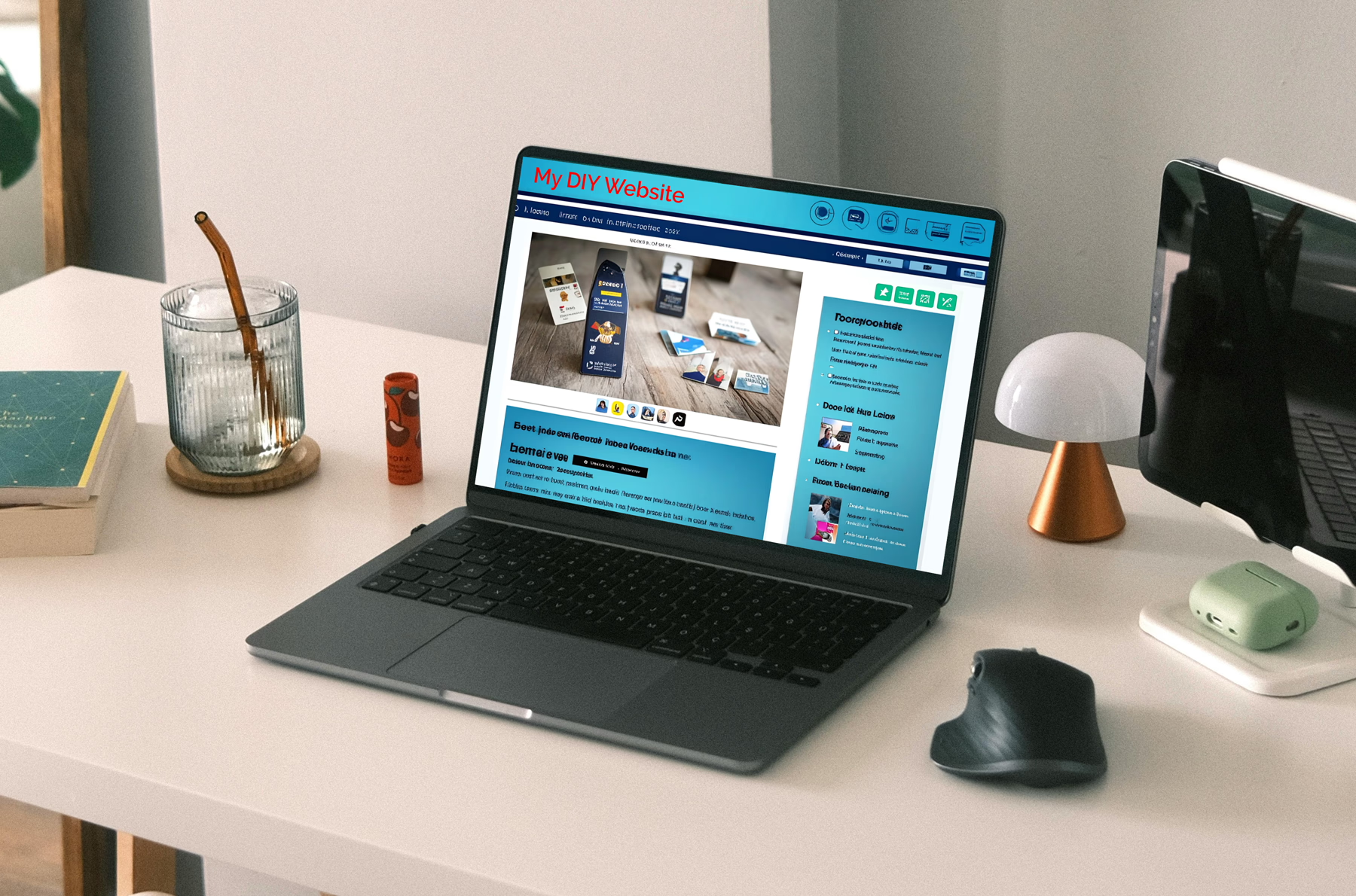
Like it or not, people judge your business by its website. A homemade website nearly always looks, well, homemade - and those subtle visual cues instantly undermine trust that you need to earn.
Common DIY design issues include:
Your visitors may not consciously spot these mistakes, but they’ll feel them. And when something feels “off”, they quietly click away - long before you’ve had a chance to win them over.
Even if your site looks half-decent, most DIY websites fall flat when it comes to messaging.
I often ask prospects to explain their business out loud, and they do it brilliantly. Clear, confident, and compelling. But when I look at their existing website, that same clarity has vanished. The message is diluted, the purpose is unclear, and the conviction is missing. That is because writing for the web is a skill in its own right.
Too many self written websites are built on assumption. Business owners know their offering inside out, so they naturally assume it is obvious what they do. The result is that the essentials are left unsaid. What the product or service actually is. What problem it solves. And why a visitor should choose them over a competitor.
Your message needs to follow a clear, psychologically sound structure, often referred to as the path to conversion. This guides a visitor from first awareness, through understanding and trust, and ultimately to taking action.
A successful website must do three things:
DIY websites rarely achieve any of these. And it’s a tough pill to swallow when you realise that the DIY website you spent weeks producing - the one you think looks great - is failing your business on these three critical levels.
If you truly want your website to work for you, not against you, get professional help.
I know it’s easy to think, “Well, he would say that, wouldn’t he?” but the reality is you’ll save time, avoid frustration, and actually get results that make a difference to your business.
Let’s chat about how I can help you build a fast, professional, and SEO-optimised website that actually delivers results.